This article describes the framework of a SiD database, including definitions and examples.
Each database is built in layers. Larger consortia will have more complex structure, while smaller programs will be simpler.
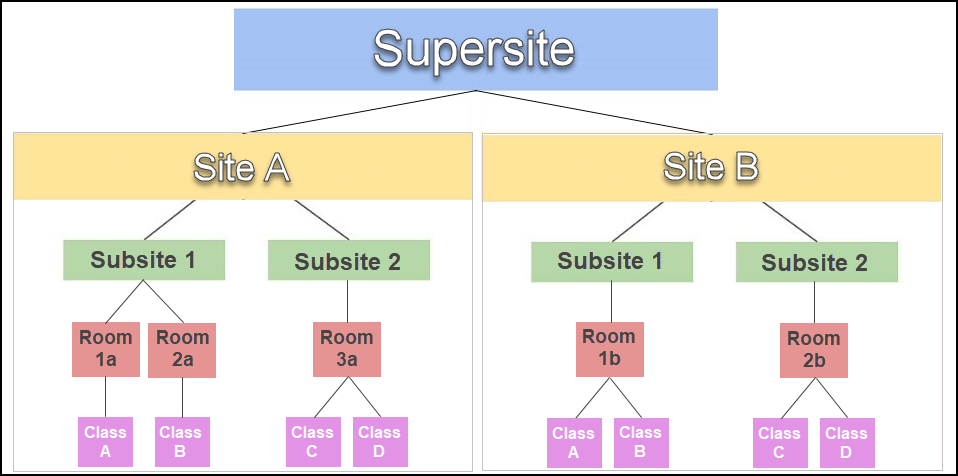
This is the structure for all databases:
supersite (if any) -->site -->subsite -->room -->class
Components
Every program will have at least one of each of the following divisions:
- Site: distinct fiscal entity that receives ABE funding and handles staff hiring, etc.
- Subsite: a building or physical locations grouped together for planning, data management, and internal reporting.
- Room: the actual room name/number within a building where classes occur.
- Class: A group of students meeting regularly to study a subject under the guidance of a teacher. The class title should be reflective of what’s being taught in the class (GED Prep, ESL Level 1, Day ESL Literacy, Adult Diploma).
For one-room schoolhouses, where a variety of subjects and levels are taught on demand, use broader class names, like "ABE/ESL."
Consortia with multiple databases will have a supersite level, which is strictly for running consortium-wide reports.
Real Life Examples
Supersite with multiple sites and subsites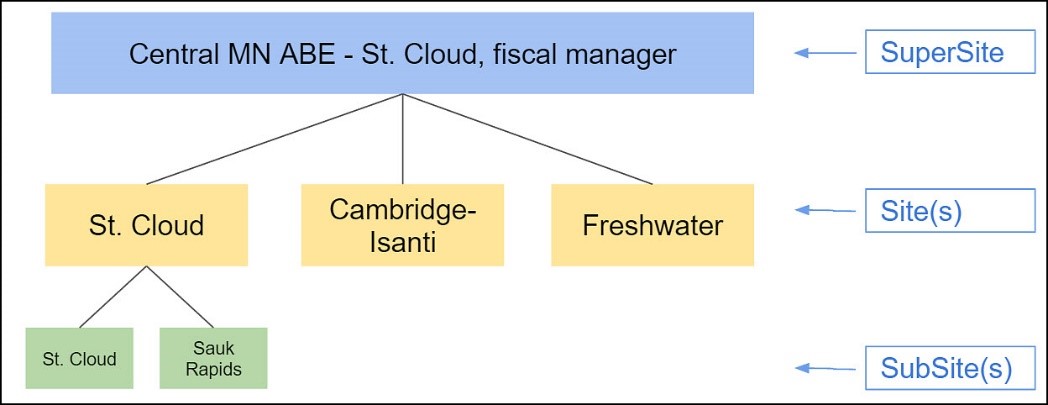
Site with multiple subsites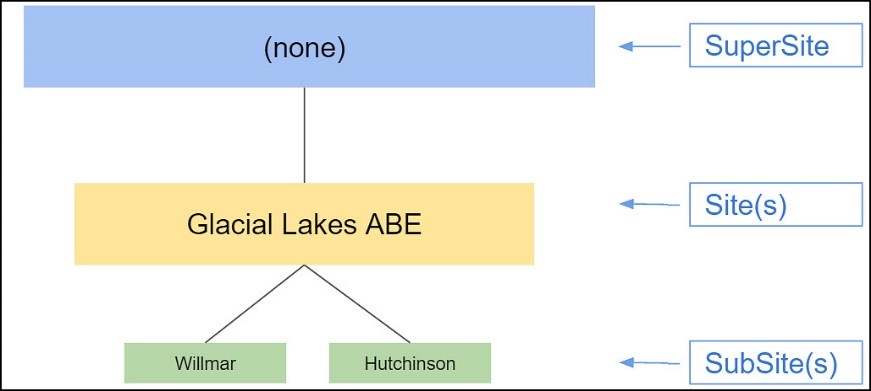
Site with a subsite of the same name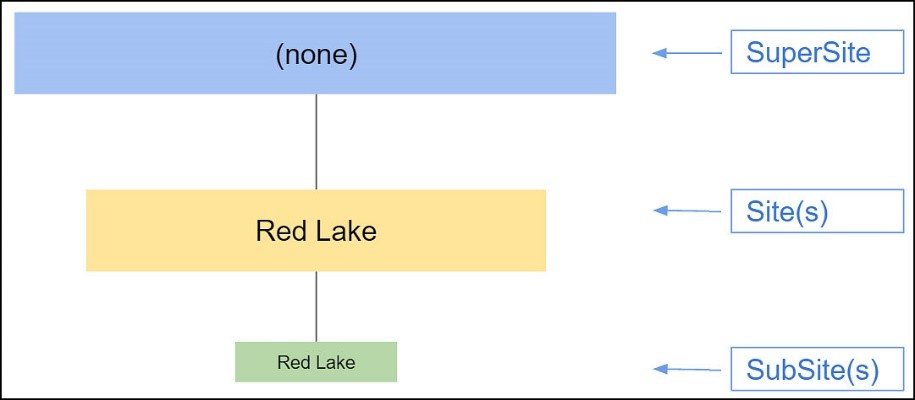
0 Comments